
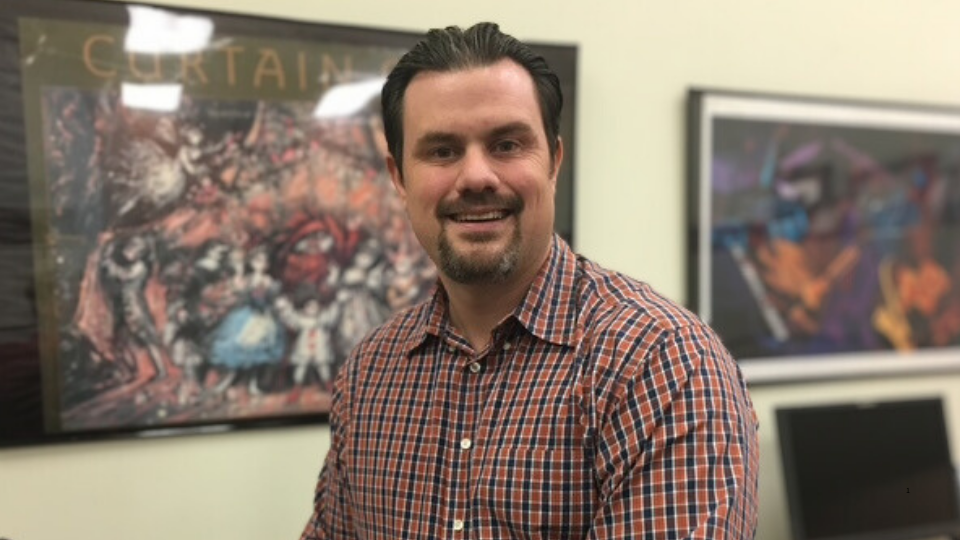
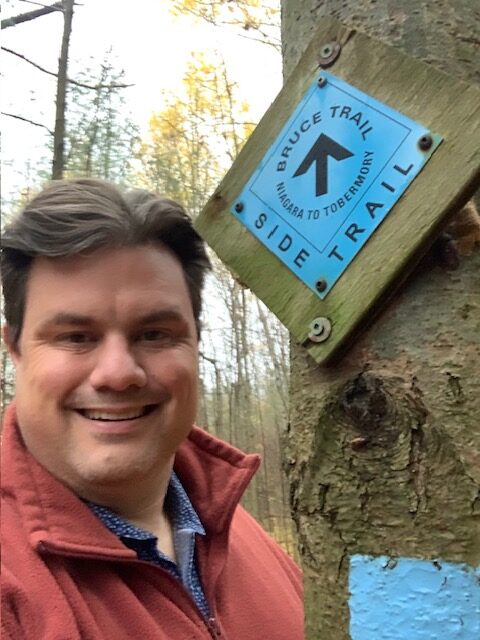
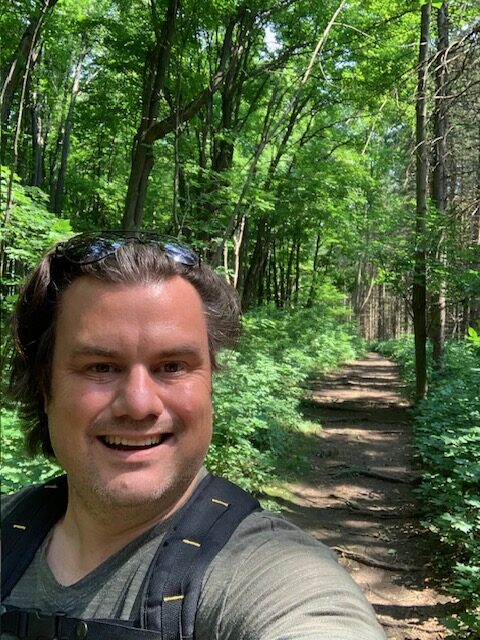
Andrew Locker’s social media is peppered with photos of the lush landscapes of Ontario. A tranquil river in the Upper Grand Trailway. An intricate exposed tree root system at the Elora Gorge Conservation area. A cattail jutting out of a pond in the Orangeville wetlands and a splash of red berries from a mountain ash. “I do a lot of hiking. I love to walk. I love urban walking. I love rural walking. I love wilderness,” he says. Andrew finds hiking to be a meditative experience. “Nature therapy for me really helps, because when I’m in the midst of beauty, I can see the beauty all around me, including myself,” he says.
For Andrew, it’s a challenge to see the beauty in himself. He’s spent much of his life feeling awkward, lonely and unworthy.
It started almost from the jump – he lost his birth mother when he was only three months old. Though he was too young to have a clear memory of that, he believes it left a traumatic mark on his psyche that he forever tried to make sense of. “We know from the literature and from research that there’s a high degree of attachment between a newborn baby and their mother,” he points out.
He was brought up by the caregiver that his father eventually married. “She’s still my mom today…so I have a biological mother, and then I have a mother that’s been in my life from a few months old to now in my late 40’s,” he says. Still, while his family life regained stability, Andrew was unsettled.
He says he was a “chunky little guy” who had awkward social skills. “I felt like I was weird, I was different than my peers,” he says. “I couldn’t put my finger on the why.”
He kind of leaned into the weirdness he felt. He tried to make his schoolmates laugh by doing silly things with food – eating off the floor or encouraging them to throw food at him. They nicknamed him “Piggy Wiggy”. “Little did I know that that was really foreshadowing, or a premonition of something that would come later in my life,” Andrew ponders. He has struggled with obesity and binge eating since he was in university.
His refuge was his music, Andrew says. He started with piano lessons at around age eight. In grade seven he picked up the clarinet, and later, the tenor sax. “I sang in choirs. I played in orchestras. I played in band. [In] childhood, adolescence, young adulthood – it was my world,” he says.
Music was where he found community. “That’s where I would find love and compassion and empathy,” Andrew says. “It would be my safe space. Even as I grew up into my adolescence and into my teenage years, I would find safety in the music room [with] other people like me that had a common and shared passion for music.” There was a camaraderie in being “the band geeks,” he says. “That was like a badge of honor for us.”
In high school is also when he started realizing something else set him apart from his schoolmates. “I always knew I was different. And then once I had the language for it, I knew I was gay,” he explains. In rural Ontario he didn’t know of anyone to talk to about his feelings. He felt he had to mask his true sexuality.
At university was when he really came out and explored his sexuality more openly. But between social anxiety and the unfettered freedom of being away from home he found himself eating “grotesque” amounts of food. He jokes that instead of gaining the “frosh 15” he gained the “frosh 50.” Recently when he got together with his old college roommates for a 25-year reunion, he recalled to them how he’d used his entire year’s meal allowance by Christmas. That began an era of binge eating that he still has to manage, using a combination of therapy and medication.
He earned a degree in music education and history – and began a career in education, one that he is passionate about. For the first years he taught elementary music and other subjects, and then advanced through the school system to become an administrator. He says he’s a teacher at heart – something he believes he got from his birth mom who herself had been a teacher.
While his professional life took off, his private life proved disappointing. As a gay man in a larger body, he still found it hard to fit in. He went out with friends to Toronto’s gay village, wanting to meet someone he could share his life with. “I never felt accepted there. I was not the physical manifestation of what other gay guys are looking for,” he says. Echoes of his youthful awkwardness and shame seemed to follow him. He recalls being told by one guy, “You’re really cute. I’d like to be with you, but I can’t be with someone that looks like that from the neck down.”
“It was repulsive to this person,” Andrew remembers sadly.
Andrew recently wrote a letter to his former self and addressed the Andrew of that period when he sought acceptance in Toronto’s gay community. It was part of a project called “Living with Obesity” for Obesity Matters, an organization that educates and advocates for people living with obesity. One line from his letter says: “People always say that you must love and accept yourself first, before expecting others to love and accept you. And it’s true. It’s easy to say, but hard to do.”
His therapist once asked him to bring in a photo of himself as a schoolkid, and to describe the boy in the picture. The words he used were scathing and hateful – the lesson, eye-opening.
“I was so unkind when I was describing myself in that picture,” he says. It was a picture of him with his grade six teacher giving him an award as he graduated. The teacher happened to be someone he thinks of as one of the most influential people in his life, after his parents. It was that teacher, he says, who influenced him to become an educator himself. The moment captured in the photo should be among his proudest of memories, but Andrew was unforgiving in describing that kid.
He wouldn’t dream of talking to his own students that way! It was a vivid reminder to him that he deserves the same compassion that he shows his students.
Andrew’s still working at it, and at the same time, he brings that daily mantra of mindfulness to others by his example.
And he did, by the way, find someone to share his life with. In fact, he and his partner of 13 years have an adopted teenage son. And recently they got married at a small family gathering.
Beyond his professional work as an educator, Andrew is also on the advisory board of Obesity Matters, helping to guide the organization’s work in a way that recognizes the varied experiences of people living with obesity.
The way Andrew feels about Obesity Matters is the way he used to feel about being with his music peeps. It’s a safe space where he feels seen – and can help others feel seen also.
He wants everyone to be able to see themselves in the landscape of the world and feel like they belong there… like a cattail popping up out of the wetlands, or a splash of red berries on a mountain ash.
—
Diet and exercise alone aren’t enough to help many people reach a healthier weight. Medical treatments are needed to address the biological changes happening in our bodies that can drive weight regain. To find a physician near you who specializes in weight management, click here.
Want motivation sent right to your phone? Sign up for our free weekly text messages to stay inspired on your health journey. Click here to sign up.
This article was sponsored by Novo Nordisk Canada. All content is created independently by My Weight – What To Know with no influence from Novo Nordisk.