By Carol Holland RD, CBE
You’ve probably heard arguments on both sides of the debate for which spread you should be putting on your toast:
- Butter is “natural.” Margarine is “just one molecule away from the plastic it’s packaged in.”
- Butter will raise your cholesterol, and margarine is good for your heart.
- You should really be putting olive oil on your toast. (Does anyone actually do that?)
Are these claims true? Let’s take a closer look at the evidence.
What is butter?
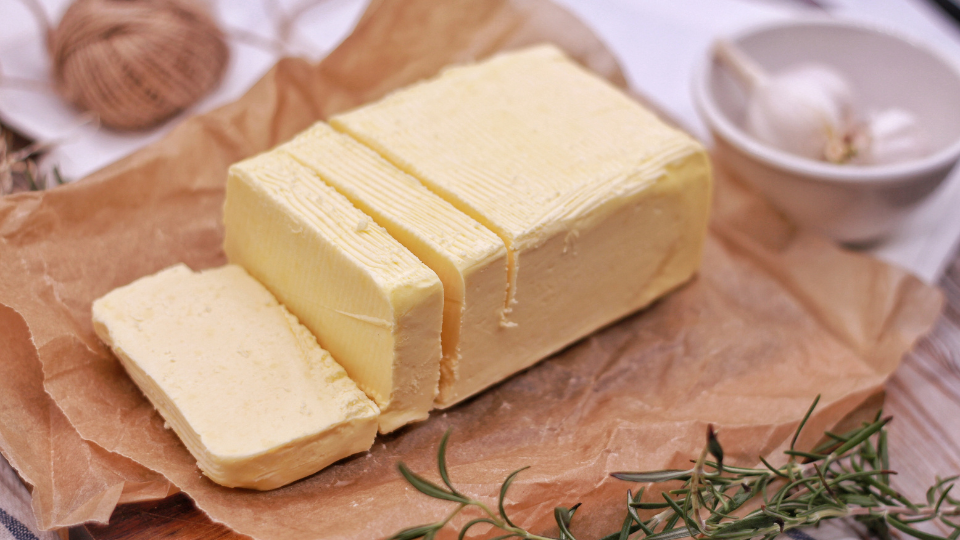
Butter is made by churning cream to separate fat from the buttermilk. It’s usually made from cow’s milk but can be made from the milk of other mammals, like goats or sheep.
Butter is high in saturated fat, which can raise your cholesterol over time.
What is margarine?
Margarine was invented in 1869 by a French chemist and was originally made of beef tallow. Between 1900 and 1920, margarine was made from a combination of animal and vegetable fats; by the 1940s, animal fats were in short supply, and companies turned to vegetable oil as the main ingredient.
Margarine contains mostly unsaturated fats. This type of fat can help lower your cholesterol. Soft margarine generally has less saturated fat than hard or stick margarine, making soft or liquid margarine a better choice.
In the early days of margarine’s production, it contained trans fats, which are known to be risky for heart health. However, trans fats are now banned in the United States, Canada, and much of Europe, making it easier to choose a product we know is healthy.
Are butter or margarine “natural?”
Both butter and margarine are processed foods. They are similar in texture, color, and fat content, and they are used in similar ways.
It’s true that margarine is more processed than butter and has more than one ingredient. Margarine is made of vegetable oils mixed with water, and to get them to stick together, an emulsifier needs to be added. Coloring is also added to make it look more like the buttery color we’re familiar with. Truthfully, though, that’s no more “unnatural” than most of the foods we buy every week at the grocery store.
So, the claim that butter is “natural” while margarine is not doesn’t really hold up.
Where do oils fit in?
Most oils are minimally processed and are especially heart-healthy when they are cold-pressed. They are versatile and easy to use in cooking and baking.
Oils that are solid at room temperature, like coconut oil, are higher in saturated fat and can raise your cholesterol.
A recent study found that butter consumption is linked to a higher mortality rate, while plant-based oils are associated with a 16% lower risk of death. Whenever possible, opt for oils (like extra-virgin olive oil, avocado oil, and canola oil) instead of butter, or try to limit your butter intake for better health.
What about seed oils?
The possibility that seed oils are the cause of all kinds of health issues is a hot topic on the internet these days.
What even are seed oils? Seed oils are oils extracted from the seeds of plants, such as canola, sunflower, soybean, and safflower. They are commonly used in cooking, food processing, and salad dressings due to their mild flavor and high smoke point.
First, let’s consider the types of fat in seed oils. It is true that some seed oils are a bit higher in omega-6 fatty acids than other types of oil, which are said to promote inflammation. However, this connection is not borne out in research. In fact, there is evidence that a higher intake of omega-6 fatty acids is associated with better heart health.
Critics also say that toxic byproducts are created in the processing of seed oils. However, the types of solvents used in the extraction process are safe, and there is no evidence that those byproducts remain in the oil after it’s processed.
So our current evidence tells us that seed oils are safe to use and a good choice for your heart health.
The bottom line:
Butter, margarine, and oil are all fats. They contain about the same number of calories per serving. All three of them will help your body absorb fat-soluble vitamins (like vitamin D). And all of them will add a creamy texture and savory taste to your cooking.
While using small amounts of butter may not significantly raise your risk of heart disease, using margarine and oil instead will actually lower your risk.
___
Diet and exercise alone aren’t enough to help many people reach a healthier weight. Medical treatments are needed to address the biological changes happening in our bodies that can drive weight regain. To find a physician near you who specializes in weight management, click here.
This article was sponsored by Novo Nordisk Canada. All content is created independently by My Weight – What To Know with no influence from Novo Nordisk.